
Origins & Roots
Long before I ever called Berlin home, my story was already becoming an international one.
My father, born to a British father and French mother in the years following the First World War, devoted his career to education and cultural exchange, teaching throughout France and the Maghreb with the French government's overseas cultural mission.
My mother, the daughter of Polish immigrants to the United States, spent nearly four decades teaching the children of American military families across Europe, North Africa and Asia through the Department of Defense Dependents Schools system.
They met while teaching in France, married on the Rock of Gibraltar, and soon found themselves beginning their family in Morocco. Without realizing it, they were laying the foundations for the life that would eventually lead us to Cold War Berlin.



Moroccan Spice
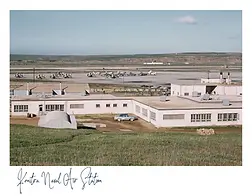
I was born at the U.S. Naval Air Station in Kenitra, Morocco, a sleepy town on the Sebou River where cultures, languages and traditions blended naturally into everyday life. English and French were spoken at home, Moroccan Arabic filled the world around me, and from my earliest years I learned that curiosity about other cultures was something to embrace.
When American forces departed Morocco in the late 1970s, our family moved to a city divided between two worlds, standing at the very heart of the Cold War.
West Berlin.

Checkpoint Childhood
Arriving in West Berlin in 1978 meant growing up in a city unlike any other.
Surrounded by East Germany and over a quarter of a million Soviet troops, protected by the American, British, and French Allies, and encircled by the Berlin Wall, it was a place where geopolitics shaped everyday life as much as everyday life reflected geopolitics. Border crossings, military patrols, and Four-Power occupation rights were simply part of my childhood and everyday life.
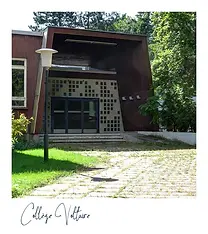
My education reflected that same international upbringing. I began at the French-speaking École Victor Hugo and Collège Voltaire in the French Sector before continuing to the Lycée Franco-Allemand / Französisches Gymnasium in the British Sector, one of Berlin's oldest and most distinguished schools. For my final years of secondary education, I crossed into a third educational tradition at Berlin American High School, graduating with honors as a member of the last class to complete its full course of study before the Berlin Wall fell.
Unlike many children of Allied military personnel whose families rotated out after two or three years, our family remained in West Berlin for more than a decade. Those years allowed me to experience not only the rhythms of daily life in a divided city, but also many of the defining moments of the Cold War's final chapter from a perspective few visitors ever had.
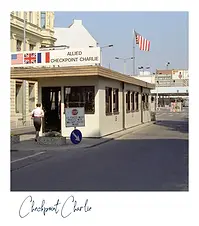
Outside the classroom, Berlin itself became an education. Summer jobs at Tempelhof Central Airport introduced me to the city from behind the scenes, while family journeys routinely took us through Military Checkpoints Alpha and Bravo along the Allied transit corridors crossing East Germany, and into East Berlin through Checkpoint Charlie. I traveled aboard the American, British, and French Military Duty Trains, rode the U-Bahn and S-Bahn through East Berlin's ghost stations, and watched history unfold from the front row as the city evolved toward the dramatic events of 1989.
Today, many of those places are museums, memorials, or stops on guided tours. For me, they represent much more.





Three Passports, One Suitcase




The fall of the Berlin Wall marked the close of one chapter of my life and the beginning of another.
I moved to the United States to attend university before beginning a career in corporate training, both in technology training and training management, years that sharpened invaluable skills for international tourism: teaching, public speaking, leadership, problem-solving, and the ability to make complex subjects both accessible and engaging.
Although I had left Berlin, I never truly left it behind. Throughout my university years, I returned regularly through 1994, watching reunification unfold firsthand as East and West slowly reconnected and the city began the long process of redefining itself. Less than a decade later I returned to Berlin, this time as an International Tour Director. Berlin became a regular stop.
The corporate classroom gave way to the motorcoach and river cruise ship, students to curious tourists and wanderers.
For over twenty years, I worked as an International Tour Director and European River Cruise Host, leading travelers throughout Europe for respected organizations including AAA Vacations, Smithsonian Journeys, the History Channel, People to People International, the Military Officers Association of America, Collette, Gate 1, Trafalgar and many others. My chosen profession has taken me across more than thirty countries, from the Nordics to the Iberian Peninsula, Western, Central and Eastern Europe, and along the continents' major waterways.
Not only did those years allow Europe's amazing history, geology, culture and societies jump off the written page, the experience was fueled by the firsthand recollections of other storytellers who lived it. I had the privilege of speaking with veterans from many countries who landed on the beaches of Normandy or fought in WWII, with men and women who grew up, lived and worked behind the Iron Curtain, local historians, museum professionals, fellow guides and ordinary citizens whose lives were shaped by extraordinary events and the tides of history. Their stories added depth, perspective, and humanity to the places I continue to share with guests to this day.